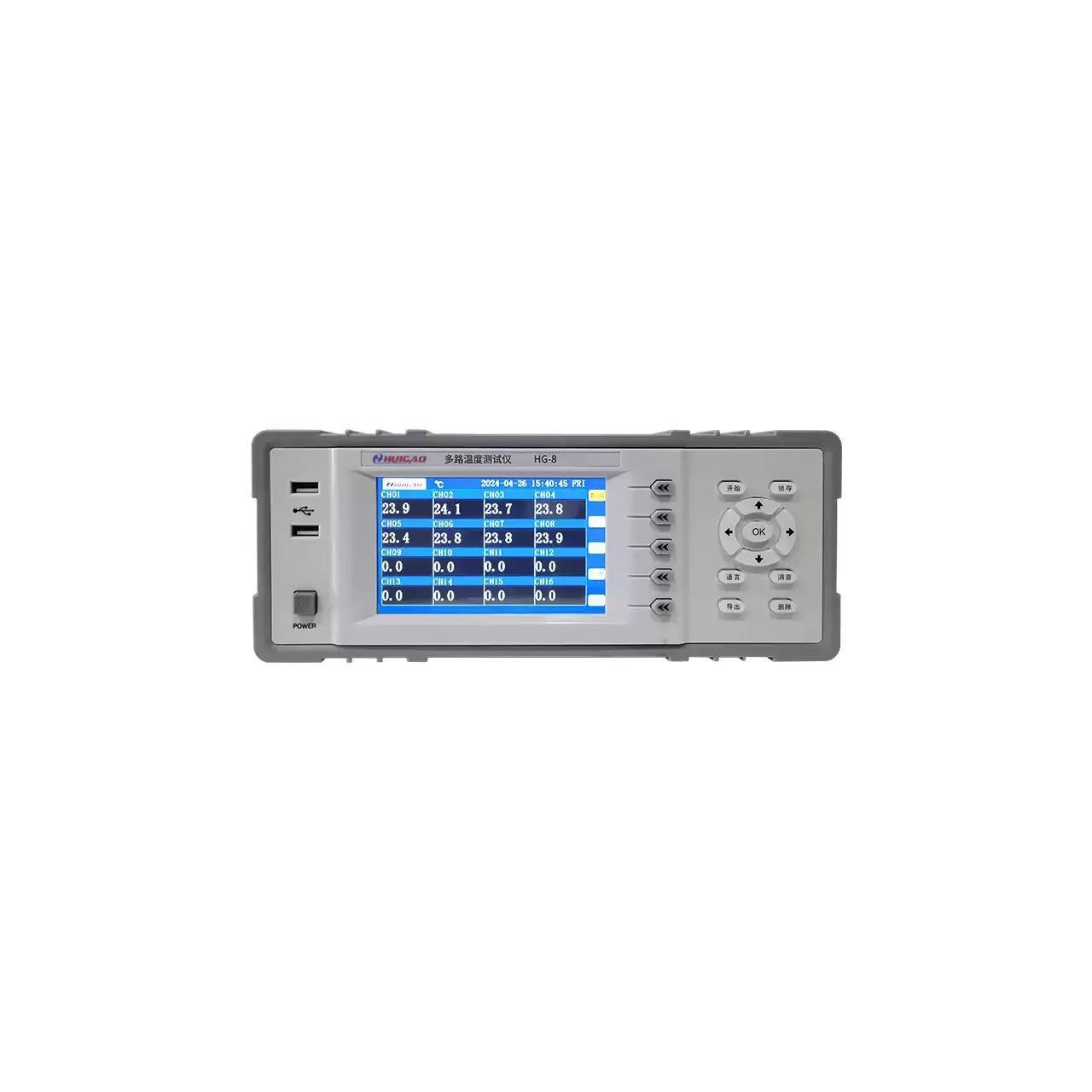
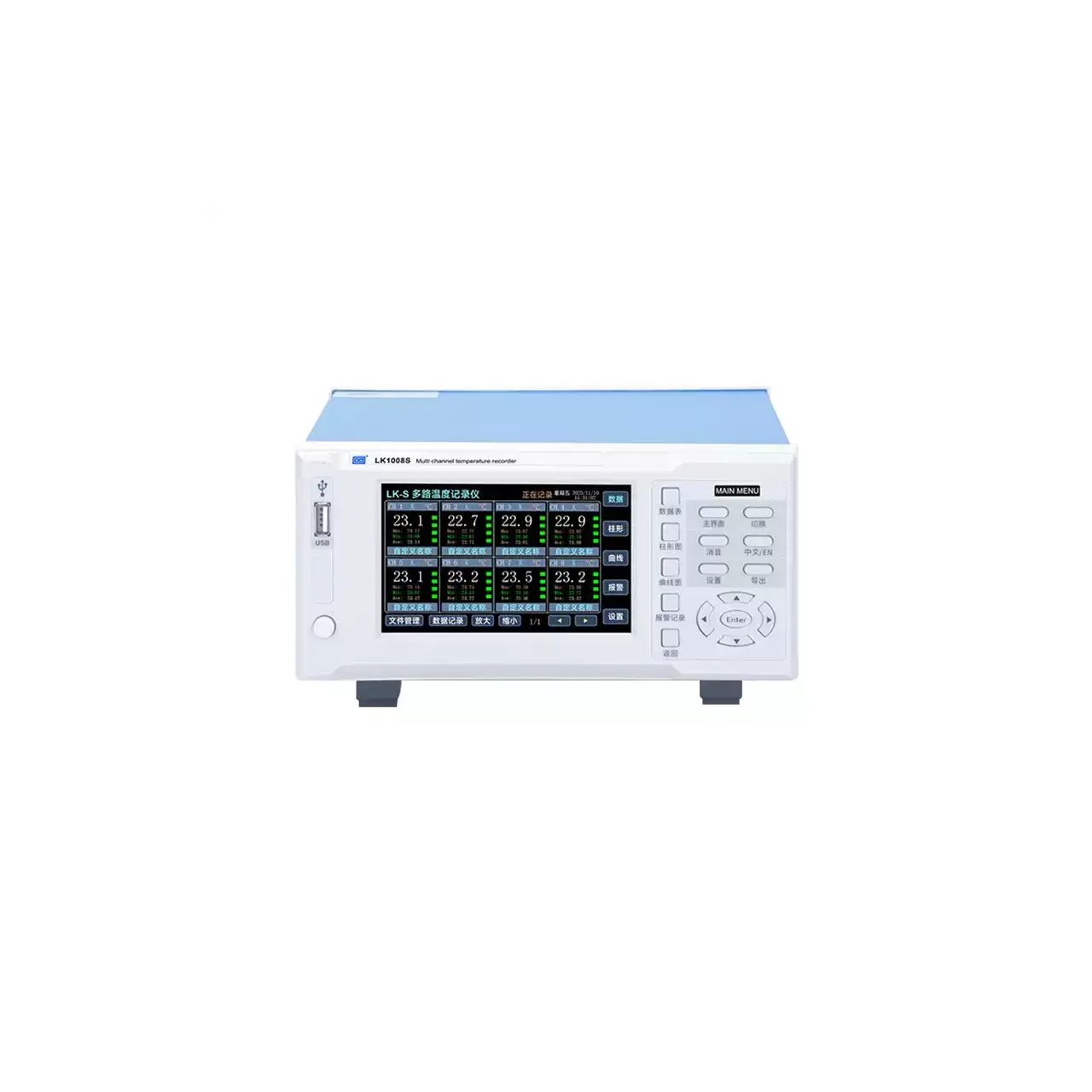
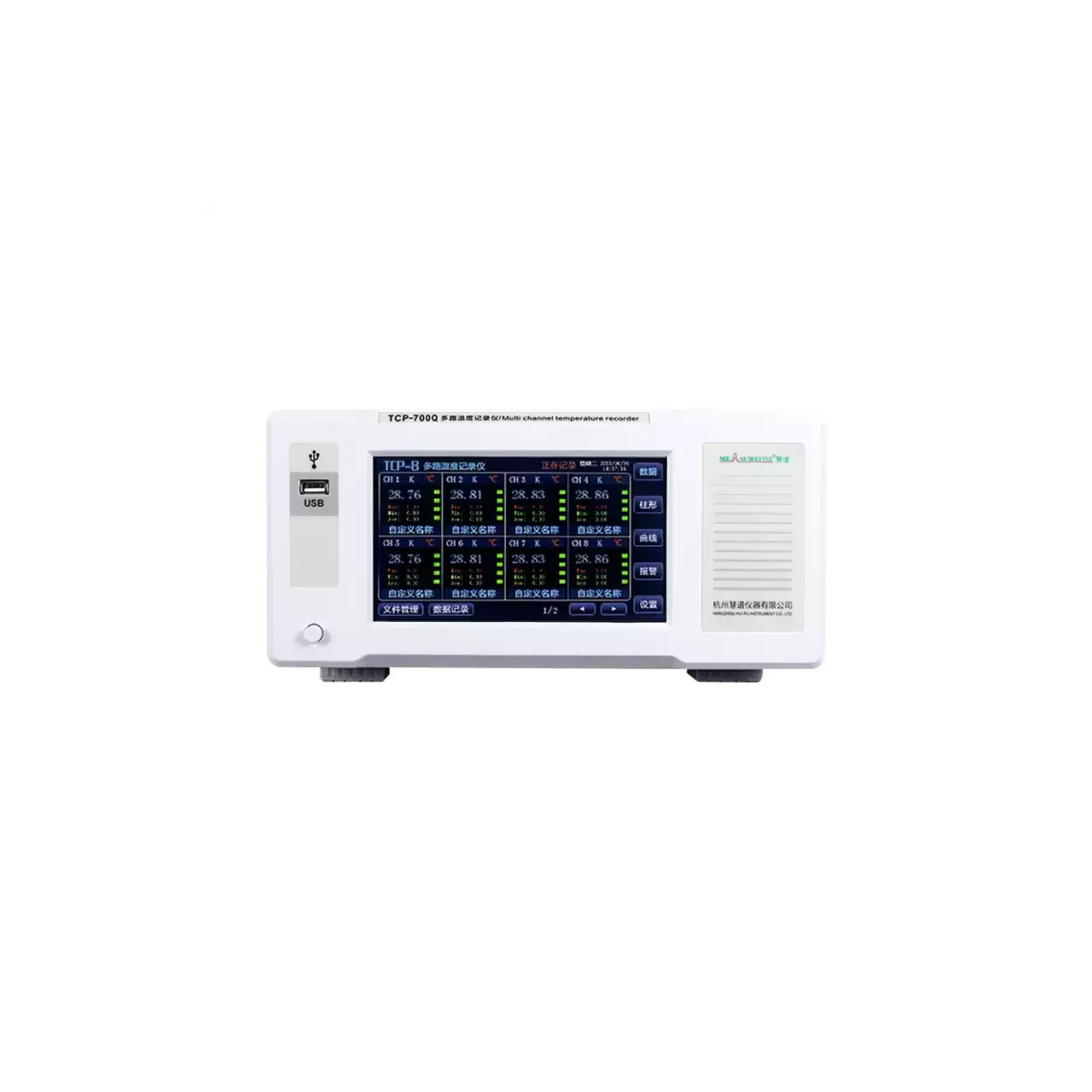
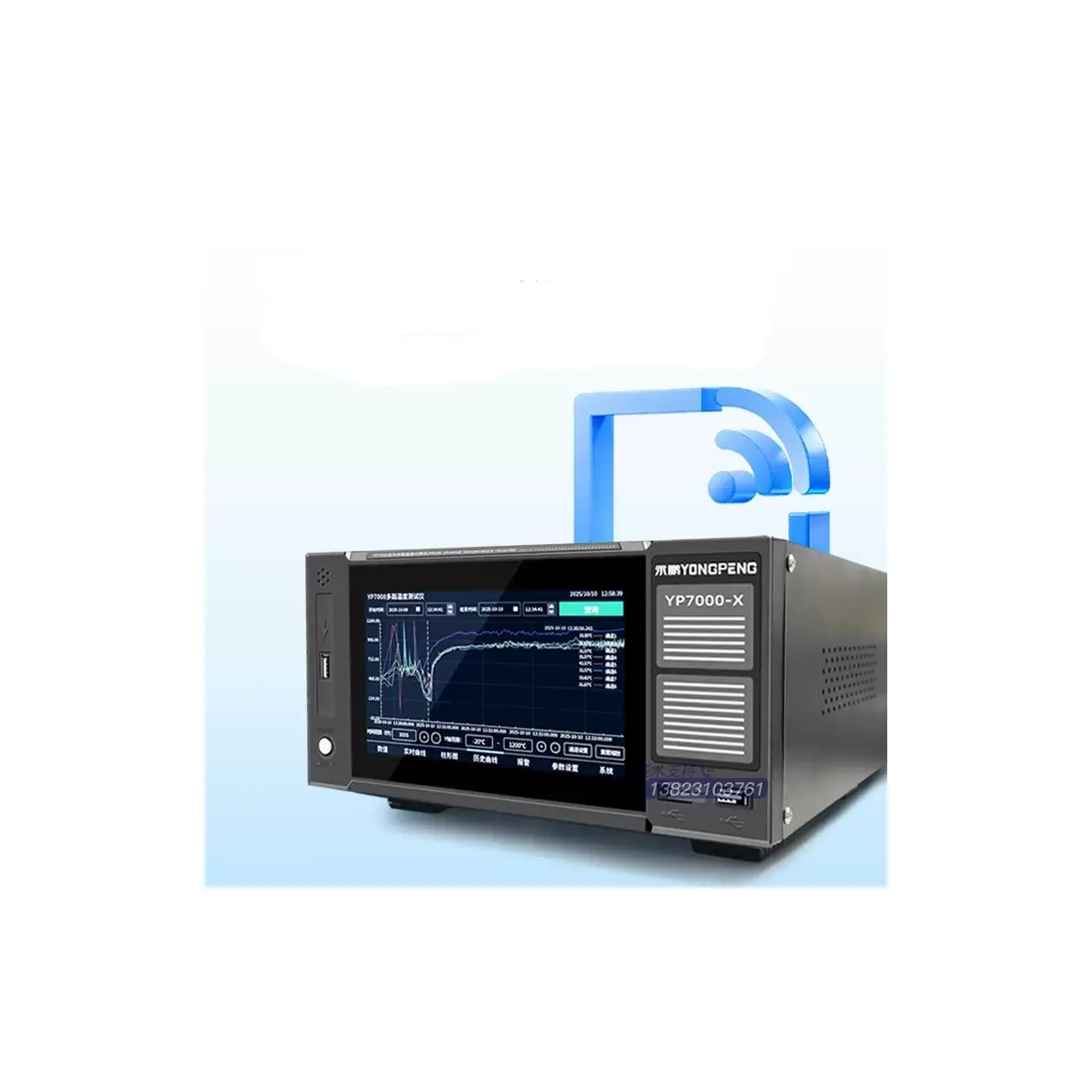
What a temperature recorder is
A temperature recorder measures temperature at several points and keeps the readings over time without an operator. It is the instrument behind an oven profile, a chamber validation, a furnace survey, a pasteurisation record or a cold-store log: the value of the exercise is the file it produces, not the number on the display at any moment. Everything about the instrument is therefore judged by whether that file can stand as evidence.
That purpose separates it from the instruments either side of it. An indicator shows a temperature to a person; a controller closes a loop and drives an output; a transmitter converts a sensor into a signal for someone else to read. A recorder may contain a display and may accept a transmitted signal, but its defining part is the acquisition chain: input, sample, timestamp, store.
The choice within the type is set by the number of points, the types of sensor, how fast the fastest event happens, how long the record must run, and where the instrument sits while it runs. The accuracy of the input is only one term in that, and often not the limiting one. This page covers those decisions and the boundary against the indicator, the controller and the transmitter.
How a temperature recorder measures
Behind each channel is an input amplifier, a cold-junction measurement for thermocouples, and an analogue-to-digital converter. In a multi-channel instrument the converters are usually shared through a multiplexer that scans the channels in turn. That architecture sets a trade the specification does not always make explicit: the more channels scanned, the longer the interval between readings on any one of them, and the readings are not simultaneous. Where two channels must be compared at the same instant - a rise across a load, a gradient across a wall - simultaneous sampling is a different instrument from a fast scanner.
Thermocouple inputs depend on a cold junction measured at the terminals, so the terminal block is part of the accuracy chain. A gradient across the block, or a block warmed by the cabinet, biases channels differently, which is why an isothermal terminal arrangement matters more than the amplifier’s resolution. A resistance sensor avoids that particular problem but needs a current source and lead compensation, so a mixed set of sensors is a genuine reason to choose universal inputs rather than one fixed type.
Isolation decides what may be connected. Sensors clamped to different parts of a live machine, or to a structure at a different potential, can create a loop through the instrument’s common if the channels share a return. Channel-to-channel isolation breaks that loop; a common return forces the installer to isolate externally. This is a safety and signal-integrity decision taken before the wiring, and it is difficult to add afterwards.
Configuration choices
Most of the specification is fixed by these decisions rather than by the accuracy class. Each one constrains the next, which is why they are settled in order.
| Configuration | Options to fix | What it actually decides |
| Channel count | The number of inputs built in, and whether it can be extended by a scanner card or a second unit | How many points can be recorded at once, and how the wiring is brought back to one place. |
| Input type | A fixed thermocouple type, a resistance sensor input, or universal inputs that accept several sensor types | Whether a mixed sensor set can be handled, and whether a channel can be re-purposed without a different instrument. |
| Sampling arrangement | A multiplexed scan across the channels, or simultaneous sampling on all of them | Whether channels can be compared at the same instant, and how the interval grows as channels are added. |
| Cold-junction and terminal arrangement | An internal cold junction, an isothermal terminal block, or an external reference | The accuracy chain for thermocouples, and whether channels drift against each other as the cabinet warms. |
| Isolation | A common return across channels, or channel-to-channel isolation | Whether sensors at different potentials can be connected directly, and whether a ground loop is possible. |
| Sample interval and record length | The fastest interval, the memory size, and whether a removable card extends the record | Whether a short event is captured, and how long the instrument can run unattended. |
| Interface and software | A local display and keys, a serial, network or wireless link, and the export format | How the record leaves the instrument, and whether it can be opened by the system that has to keep it. |
| Power and housing | Mains, battery or both; a bench case, a panel mount or a sealed enclosure | Where the instrument can run, and whether it can travel with the product through a process. |
How to choose a temperature recorder
| Factor | Why it decides the answer | How to settle it before enquiring |
|---|
| The number of points and their spread | It fixes the channel count and the amount of wiring, and long leads bring their own error | Give a count and a sketch of where the sensors sit. |
| The sensor types | A mixed set pushes towards universal inputs; a single type allows a simpler instrument | List each sensor type, and whether any are already installed. |
| The fastest event to be captured | The interval has to be shorter than the event, and a scanned instrument’s interval depends on the channel count | State the shortest change that must appear in the record, and how fast it happens. |
| The duration of the record | Memory and power together set how long the instrument runs unattended | Say how long the run lasts and whether it repeats. |
| Whether channels are at different potentials | It decides whether isolation is required | Describe what the sensors are attached to, and whether the machine is live during the test. |
| What the record is for | Validation evidence imposes timebase and export requirements that a trend does not | Say whether the file is kept as a record, compared with a previous run, or only watched. |
| Where the instrument sits during the run | A chamber, a panel, a vehicle or an outdoor site each impose a different housing and supply | State the ambient conditions, and whether the instrument moves with the product. |
If any of these are still open, send what is known. A quotation can be issued against a duty description and refined once the gaps are filled.
The nearest alternatives
These are the types an enquiry for a temperature recorder usually turns out to be, and the point at which the choice is genuinely decided.
| Nearest alternative | What separates it from a recorder |
| Temperature indicators | Shows a temperature at the point of measurement for someone to read. It has no record, no timestamp and no file, so it cannot produce the evidence a validation or a batch record needs. |
| Temperature controllers | Closes a loop and drives a heater or a cooler to hold a setpoint. It reports its own control variable, which is not an independent record of what the process did; a recorder observes without influencing. |
| Temperature transmitters | Converts a sensor into a current or bus signal for another system to read. A transmitter is a link in the chain and a recorder can be its destination, but the transmitter alone keeps nothing. |
The four types sit on the same loop and do different jobs: the transmitter carries the signal, the indicator shows it, the controller acts on it and the recorder keeps it. A project that needs a record has to buy the recorder, whatever else is already installed.
What to include in the enquiry
The first reply can be a quotation rather than a set of questions if the enquiry carries these. Where a figure is not known, send the duty description and we will confirm what it implies.
- The number of points, the sensor types and where they sit
- The fastest event, and the interval required to capture it
- The duration of the record, and whether the instrument runs unattended on battery
- Whether the sensors are at different potentials, which decides on isolation
- How the record leaves the instrument, and in what format it has to be kept
- The environment, the quantity, the destination port and the required delivery date