What an insulation resistance tester is
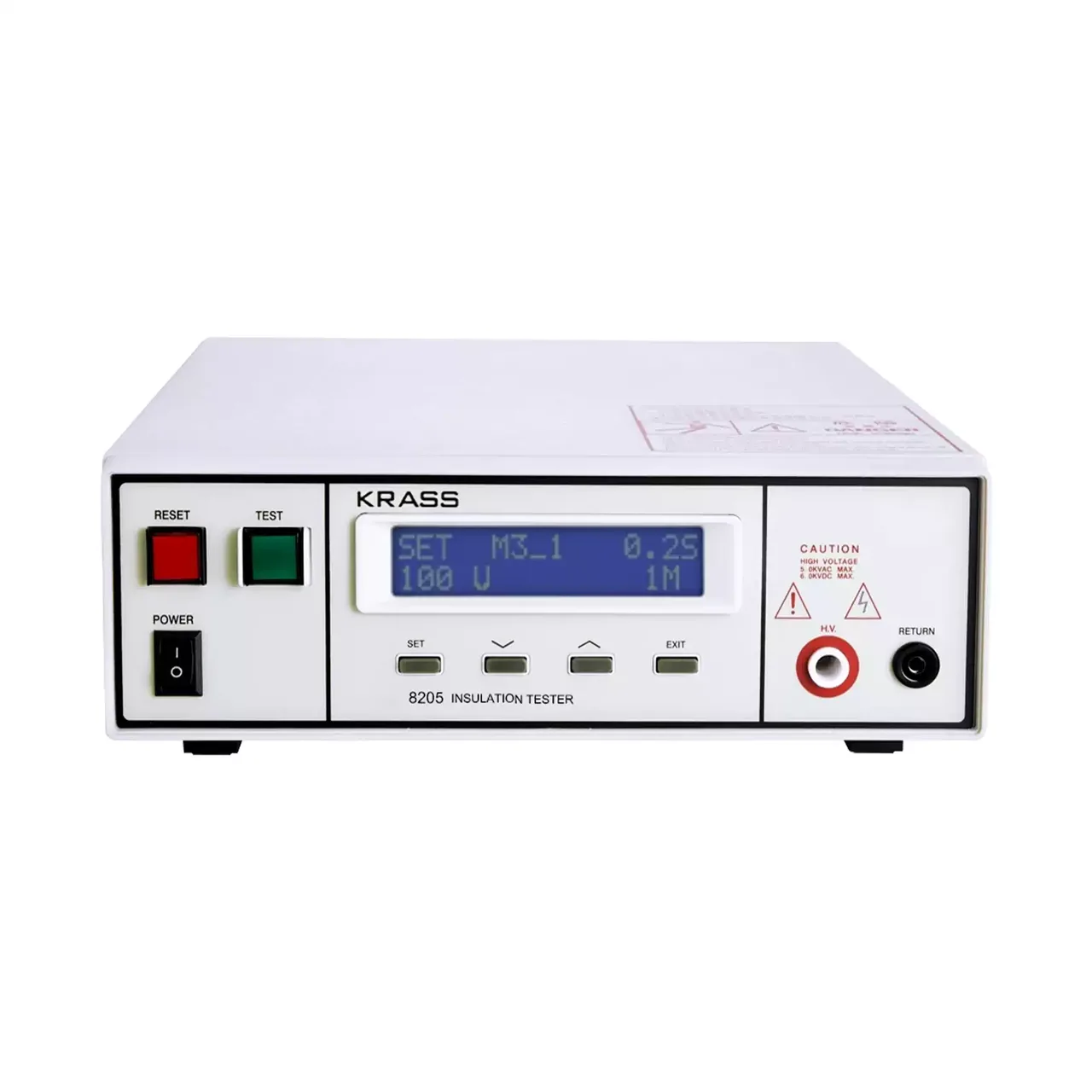
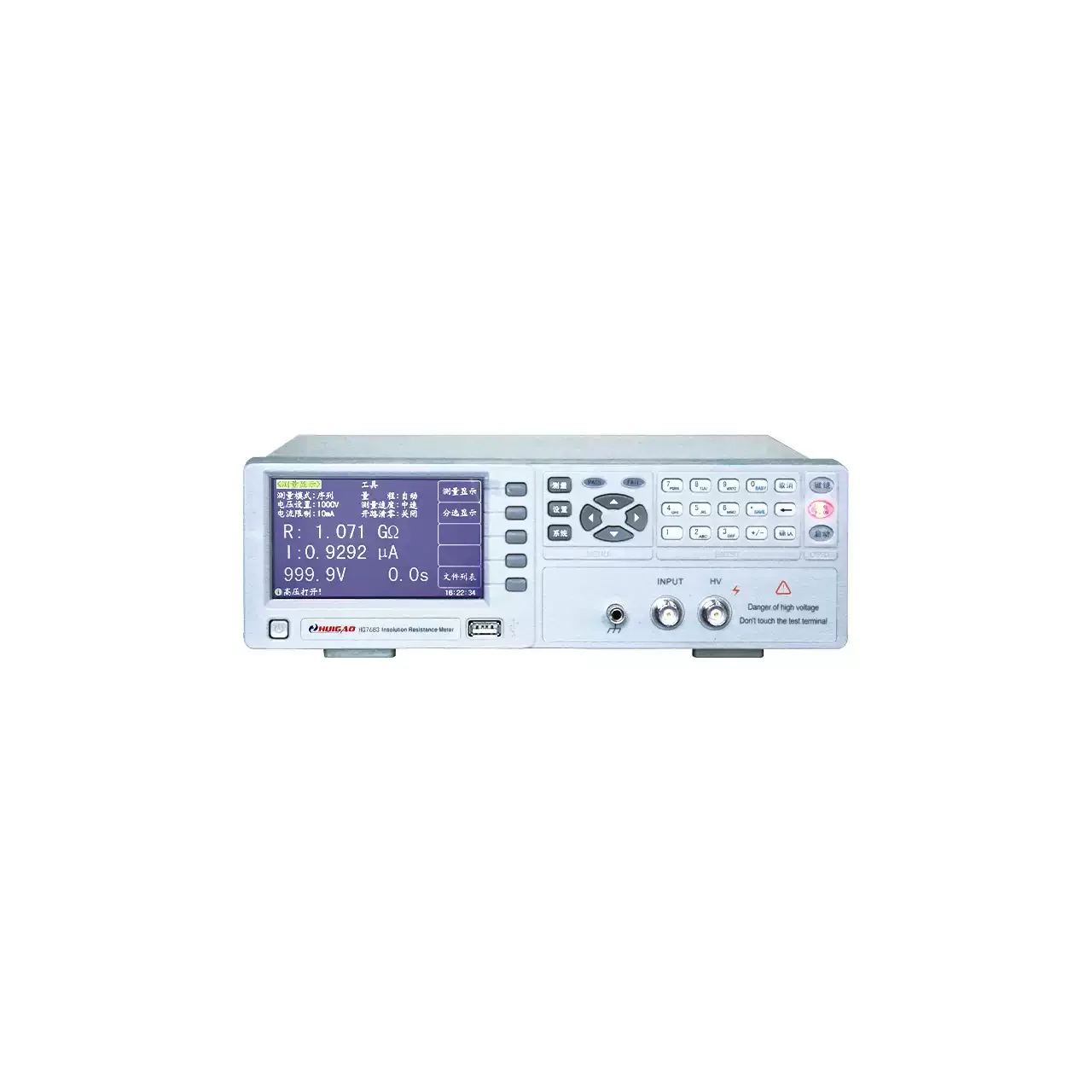
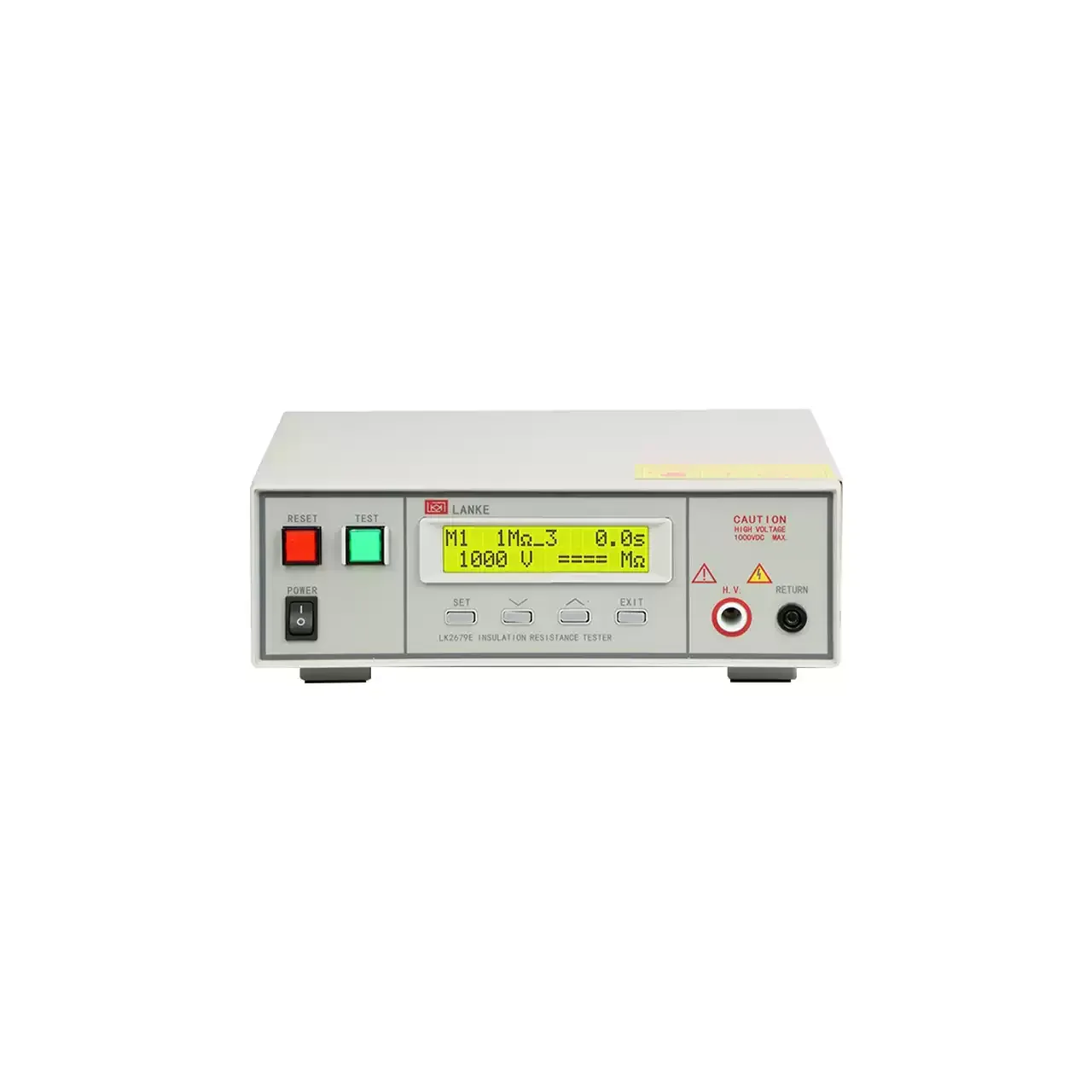
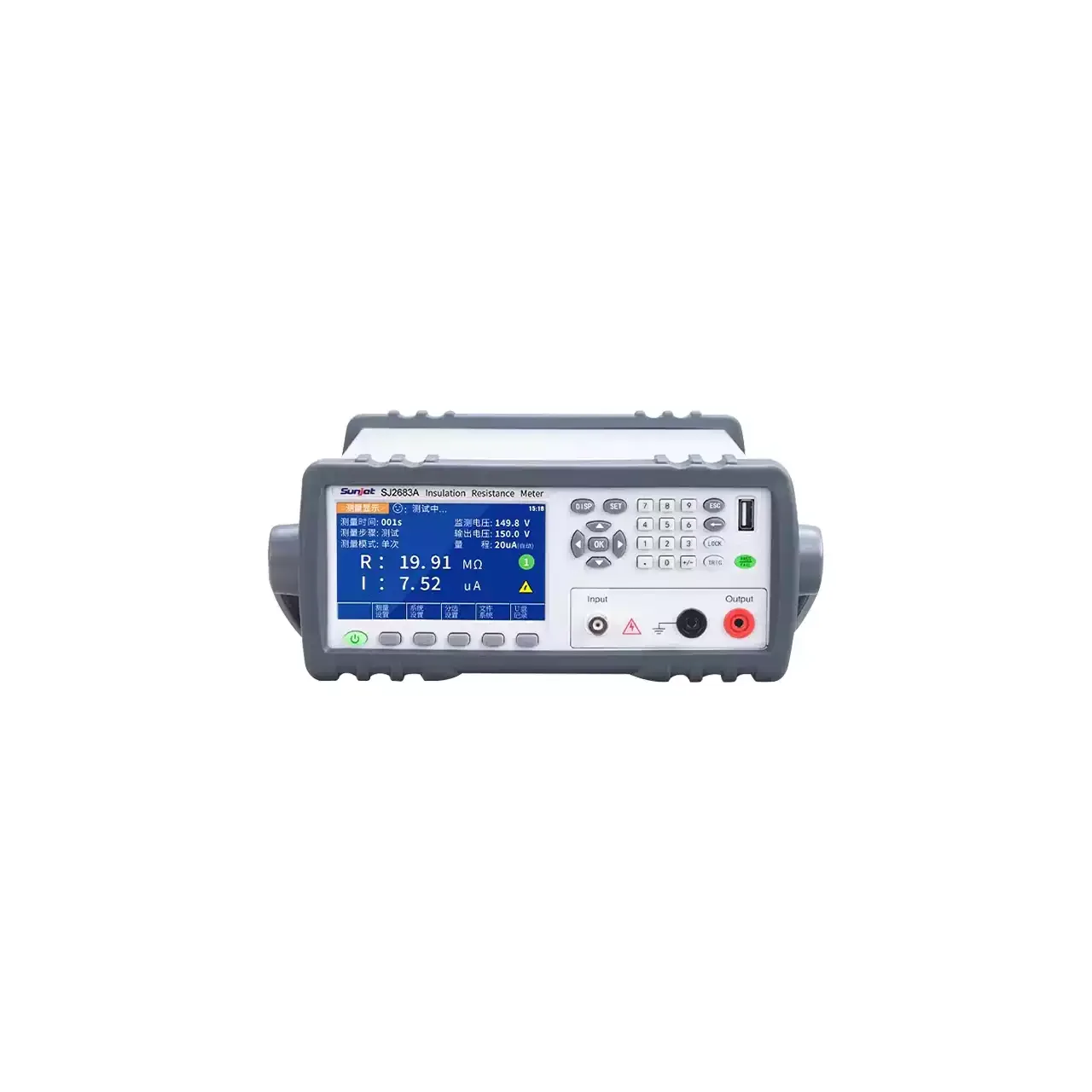
An insulation resistance tester applies a direct voltage across an insulation path and measures the very small current that crosses it, reporting the result as a resistance. The path may be between a winding and a frame, between a conductor and a screen, between a live part and an enclosure, or between an electrode and the earth it is buried in. The instrument is a high-voltage source and a sensitive current meter in one housing, and the resistance is arithmetic rather than a direct reading.
That arithmetic is why the type is not interchangeable with a general ohmmeter. The currents are tiny, the voltages are high, and the insulation behaves like a capacitor before it behaves like a resistor. A reading taken the instant the voltage is applied is dominated by charging current; the figure settles only as that current decays, and on a large machine it keeps changing for minutes. The instrument therefore has to hold its voltage into a capacitive load and to offer timed measurements if the result is to mean anything.
What separates one tester from another is the range at the top, the test voltages it can produce, how it copes with a capacitive item, and whether it can produce the timed ratios a maintenance standard asks for. This page covers those, and the boundary against the safety tester that also applies a high voltage but returns a verdict rather than a resistance.
How an insulation resistance tester measures
The measurement is a direct-voltage bridge in the simplest sense: a known voltage is applied, the resulting current is measured, and the resistance follows. The difficulty is that the current has three parts which decay at different rates. The charging current of the insulation’s capacitance falls away quickly, the absorption current falls slowly as dipoles in the dielectric align, and the true leakage current is the small steady remainder. A spot reading taken after a fixed interval is therefore a mixture, and two insulations with the same true leakage can read differently because their absorption differs.
The timed ratios exist to separate those parts. Comparing a reading taken late in the test with one taken earlier gives an index that is largely independent of the insulation’s size and temperature. A dry, sound insulation absorbs slowly and the ratio stays high; a wet or contaminated one has little absorption and the ratio collapses. That is why a maintenance standard can ask for the ratio rather than for a single resistance, and why a tester without timed functions cannot produce the evidence the standard wants.
The other limit is physical rather than electrical. Surface contamination across a terminal block or a dirty bushing carries a current that has nothing to do with the insulation behind it, and at these currents it can dominate. A guard terminal, connected to a conductive ring between the two measurement points, diverts that surface current away from the measurement. Where guarding is not provided the reading may still be stable and simply wrong, which is the harder case to notice.
Configuration choices
Most of the specification is fixed by these decisions rather than by the accuracy class. Each one constrains the next, which is why they are settled in order.
| Configuration | Options to fix | What it actually decides |
| Test voltage | A single fixed voltage, a set of selectable steps, or an adjustable output | Which equipment classes can be tested at the level their standard names. The voltage is chosen from the item, not from the top of the instrument’s range. |
| Resistance range and top end | The highest resistance that can be displayed, and the resolution near it | Whether a healthy insulation gives a number or an over-range indication, which is the difference between a trend and a pass. |
| Source capability | The current the instrument can deliver while holding its test voltage | How long a large capacitive item takes to reach the test voltage, and whether the early readings are usable at all. |
| Timed measurements | A single spot reading, a timed reading, and the ratio functions between two moments in the test | Whether the evidence a maintenance standard asks for can be produced, and whether absorption can be separated from leakage. |
| Guarding | A guard terminal and the lead arrangement that goes with it | Whether surface leakage is excluded. Without it a contaminated terminal can dominate a sound insulation. |
| Power source and housing | Mains, battery or a hand-driven generator, in a bench or a portable case | Where the test can be performed, and whether it depends on a supply at the point of use. |
| Storage and interface | Internal memory, a serial or wireless link, and the report format | Whether a survey produces a record that can be compared with the previous one. |
| Discharge and safety | Automatic discharge after the test, and the indication that the item is safe to touch | What happens to the stored energy in the item after the reading. On a large machine this is the difference between a safe bench and a procedure that relies on memory. |
How to choose an insulation resistance tester
| Factor | Why it decides the answer | How to settle it before enquiring |
|---|
| The equipment class and its standard | It fixes the test voltage, and often the minimum acceptable resistance | Send the standard or the maintenance procedure. The voltage follows from the item’s rating, not from what the instrument can produce. |
| The size and capacitance of the item | A large winding takes time to charge, and its reading moves for longer | Describe the item and its rating, and say whether it is a small assembly or a machine. |
| Whether a single value or a trend is wanted | A spot reading answers a question about today; a ratio answers one about condition | State whether results are compared with an earlier test or only with a limit. |
| The condition of the surfaces | Damp, dusty or contaminated terminals add a path that is not the insulation | Describe the environment, and whether the item can be cleaned and dried before the test. |
| Where the test is performed | A laboratory bench, a workshop or a remote installation | Say whether mains power is available and whether the instrument has to be carried. |
| Whether the results are recorded | A survey needs stored readings at identified points, not numbers on a pad | State the form of the record and whether it is compared with a previous survey. |
| The production or maintenance duty | A repetitive line test and an occasional maintenance check need different speed and fixturing | Say how often the test is taken and by whom, since that decides between a bench and a portable instrument. |
If any of these are still open, send what is known. A quotation can be issued against a duty description and refined once the gaps are filled.
The nearest alternatives
These are the types an enquiry for an insulation resistance tester usually turns out to be, and the point at which the choice is genuinely decided.
| Nearest alternative | What separates it from an insulation tester |
| Electrical safety testers | Also applies a high voltage, but as a stress with a current limit and a pass or fail result. An insulation tester reports a resistance and can follow it over time; a safety tester’s insulation function, where one is fitted, may not have the range or the timed measurements a maintenance standard asks for. |
| Earth resistance testers | Measures the resistance of the path from an electrode or a protective conductor into the ground, not the insulation between two conductors. The two are often taken together on an installation, and neither reading can be inferred from the other. |
| Electrical test equipment | The bench bucket holds meters and sources that characterise a circuit. None of them produces the test voltage this measurement needs, so a general-purpose instrument is not a substitute however wide its resistance range. |
The useful boundary is the question being asked: whether the insulation survived a stress, how much resistance it still has, or how good the path to earth is. Three different instruments answer them.
What to include in the enquiry
The first reply can be a quotation rather than a set of questions if the enquiry carries these. Where a figure is not known, send the duty description and we will confirm what it implies.
- The equipment class, its rated voltage and the standard that sets the test voltage
- The item and its size, including whether it is highly capacitive
- The resistance range to be covered, and the lowest value that counts as a failure
- Whether timed readings or ratios are required, and how the results are recorded
- Whether the terminals are exposed to contamination, and whether guarding is needed
- Quantity, destination port and required delivery date