What an electrical safety tester is
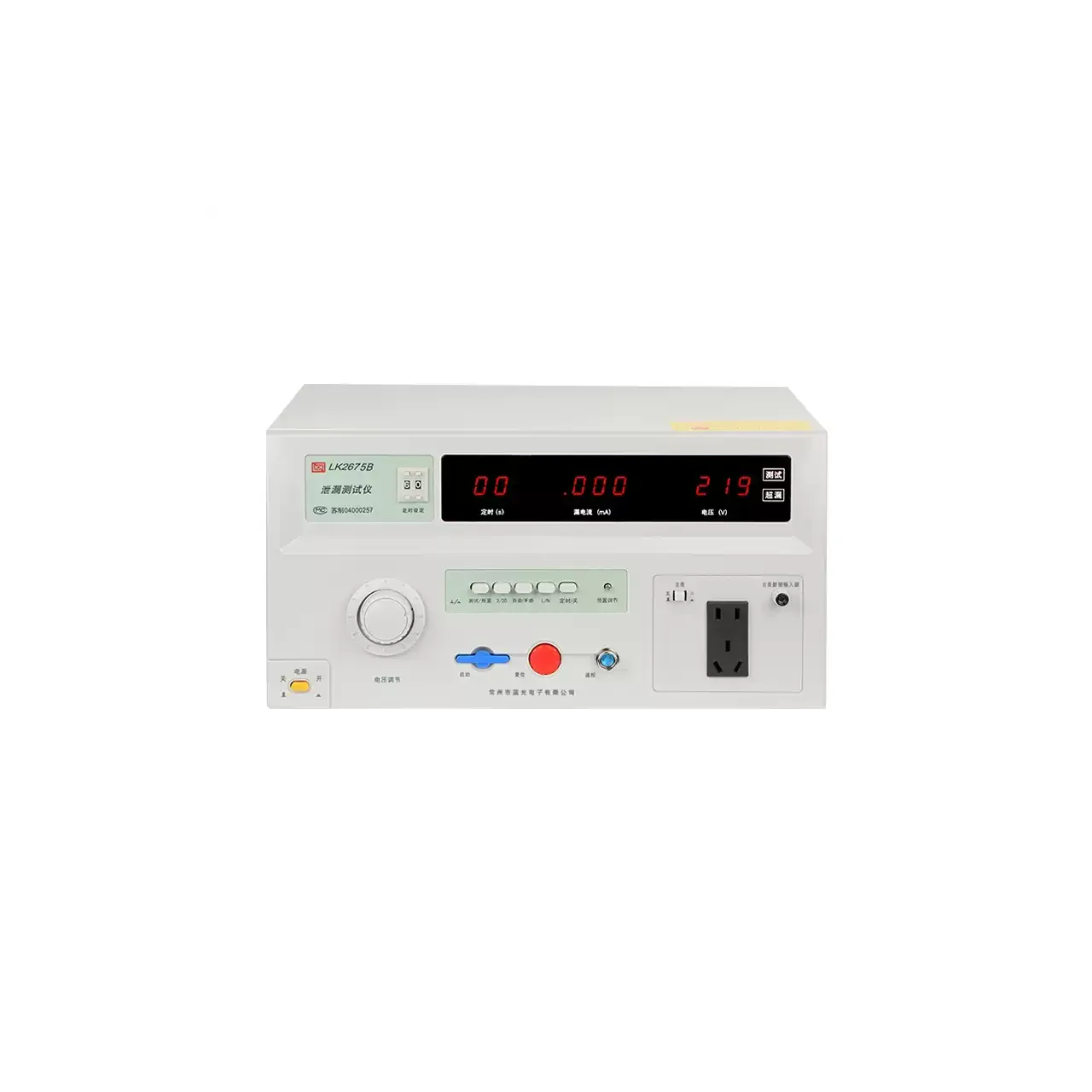
An electrical safety tester applies a stress to a finished product and decides whether it passed. The stress is a high voltage across an insulation path, a heavy current through a protective conductor, or a defined measuring network placed in the leakage path. The product is an appliance, a power supply, a transformer, a cable assembly or a medical device, and the test is the one the product standard names before the item may be shipped.
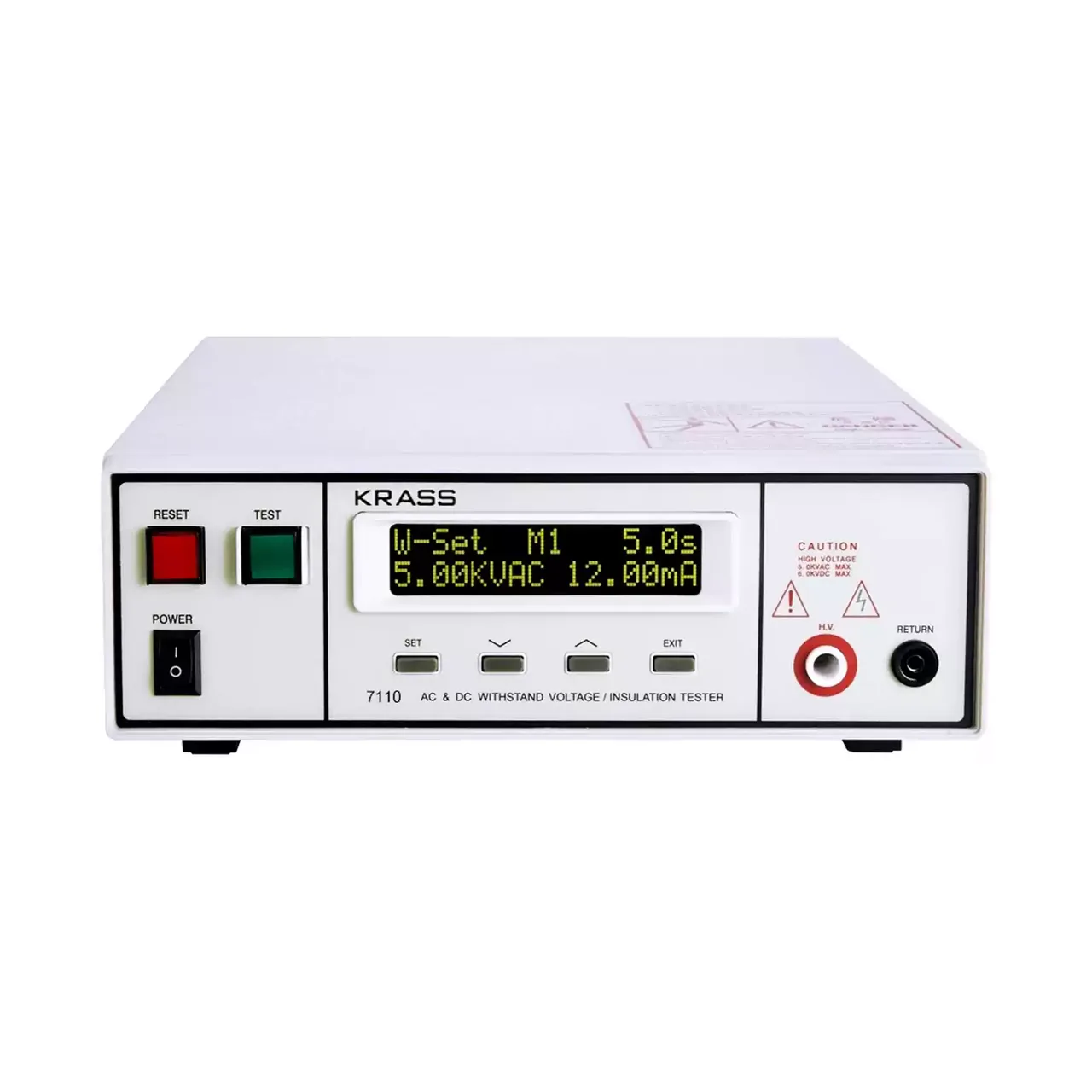
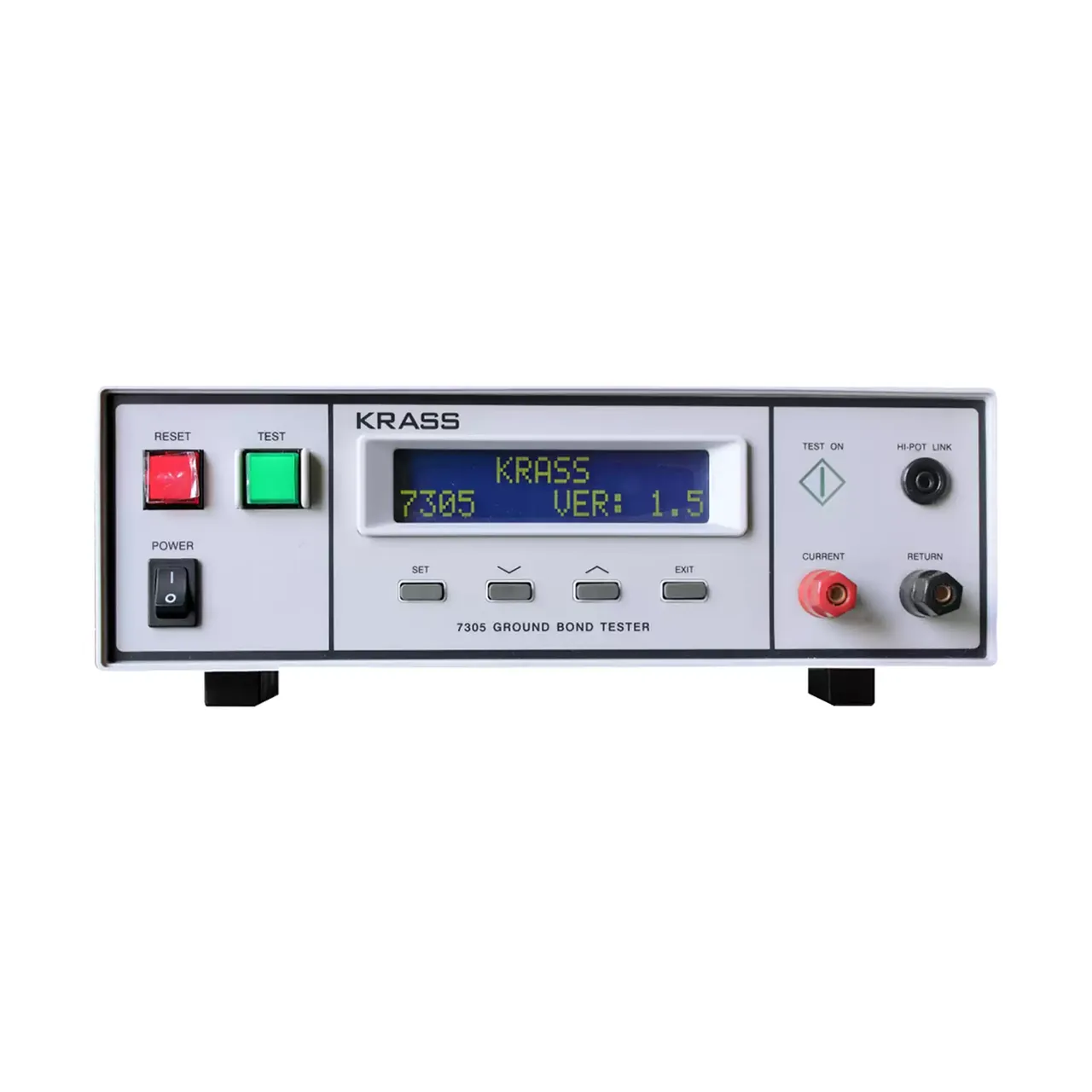
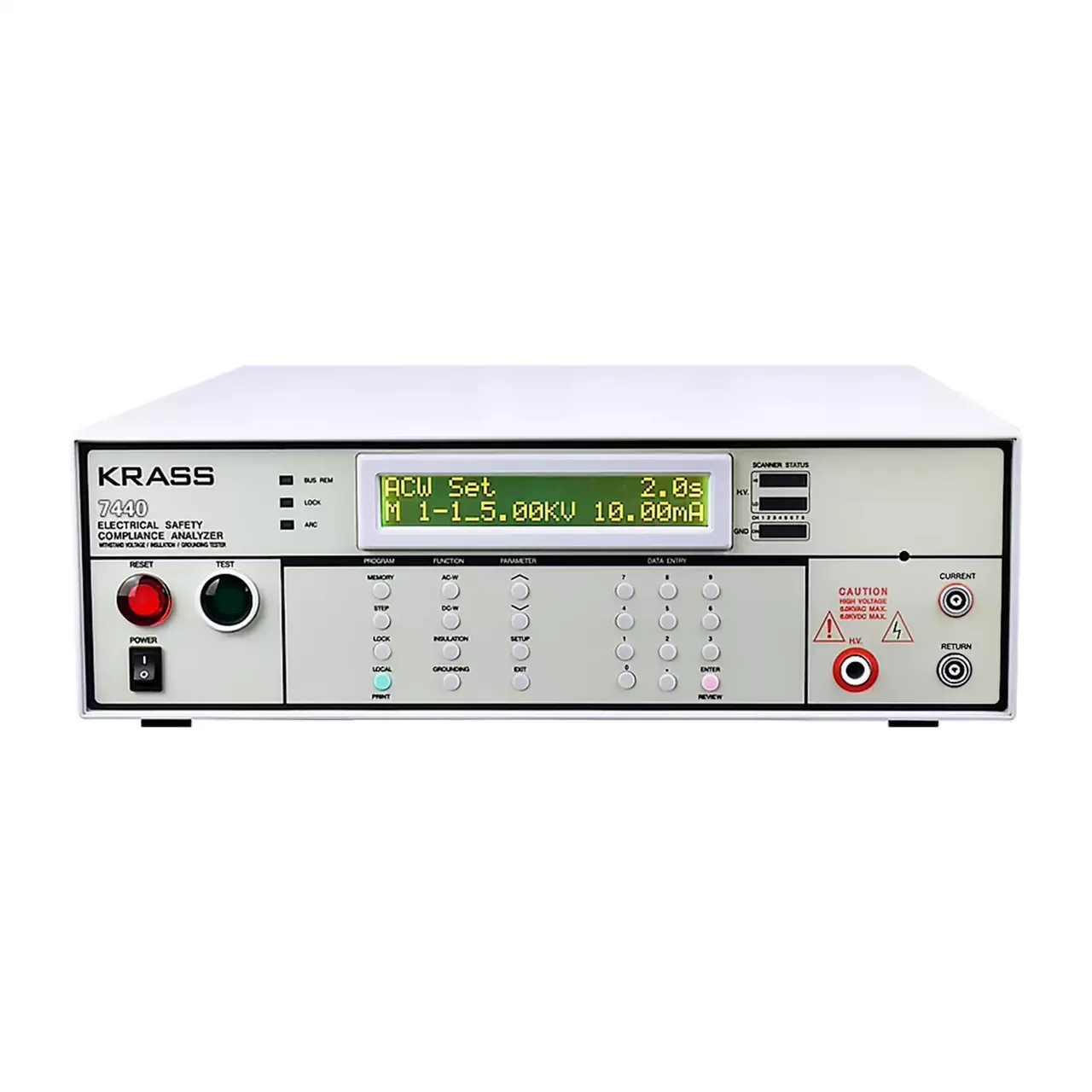
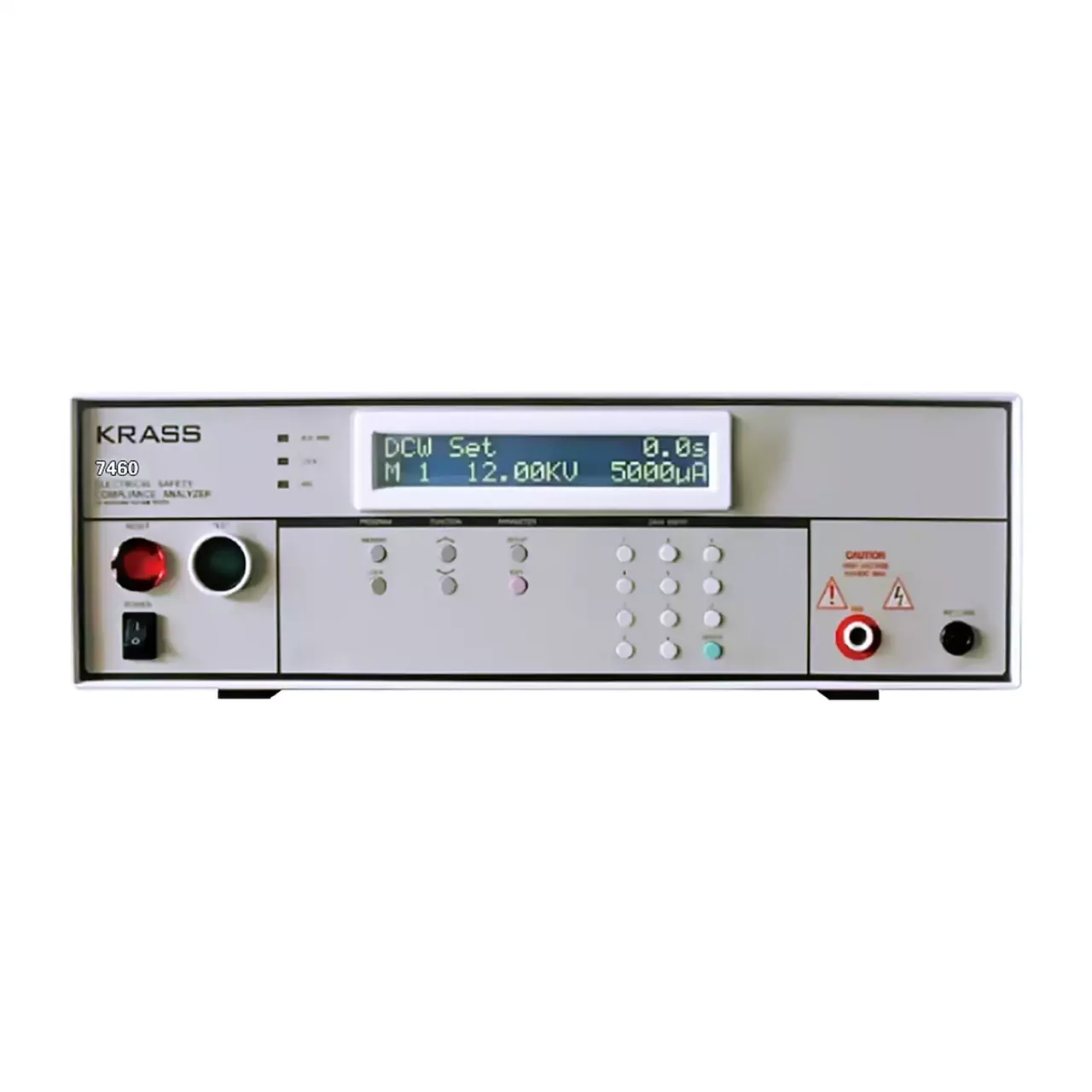
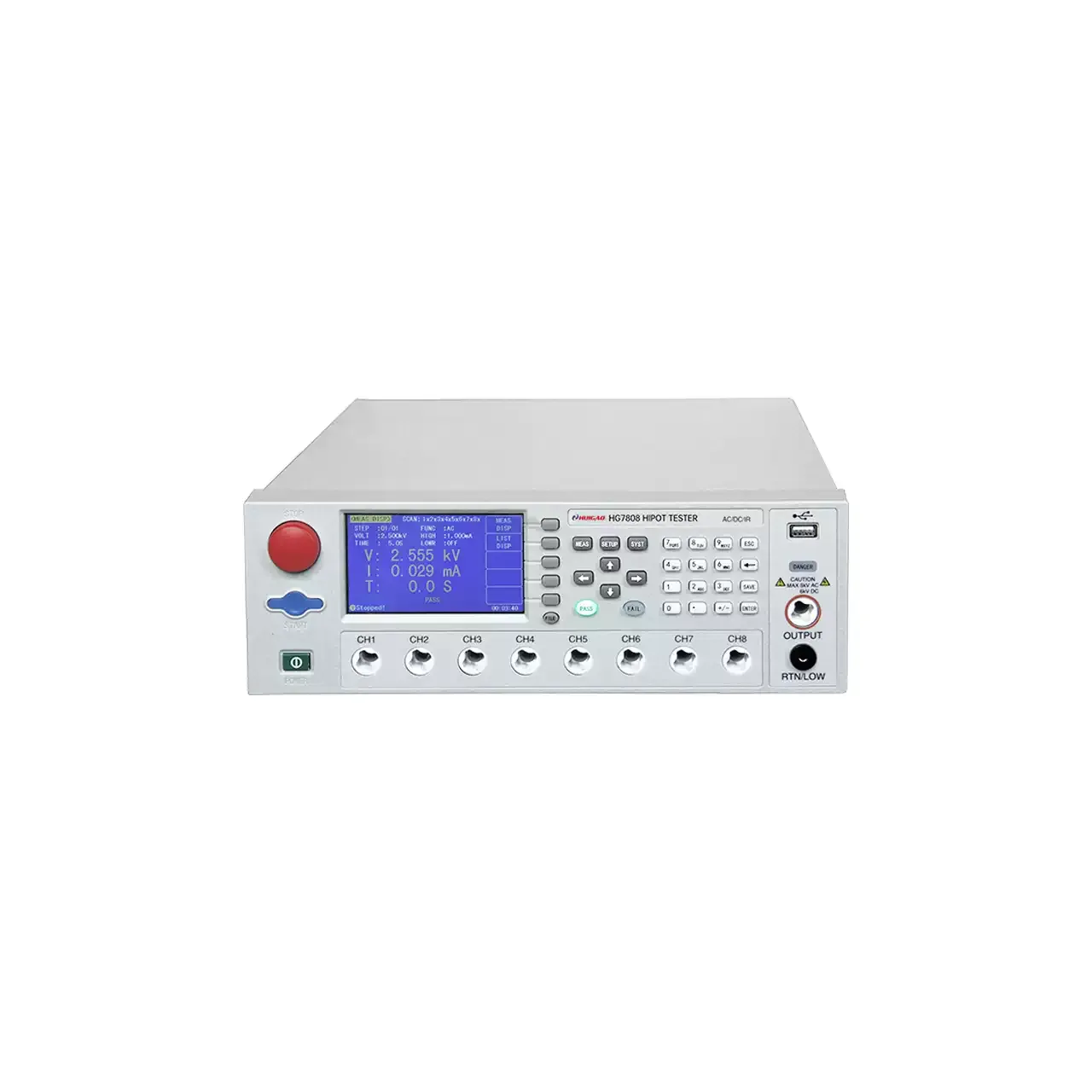
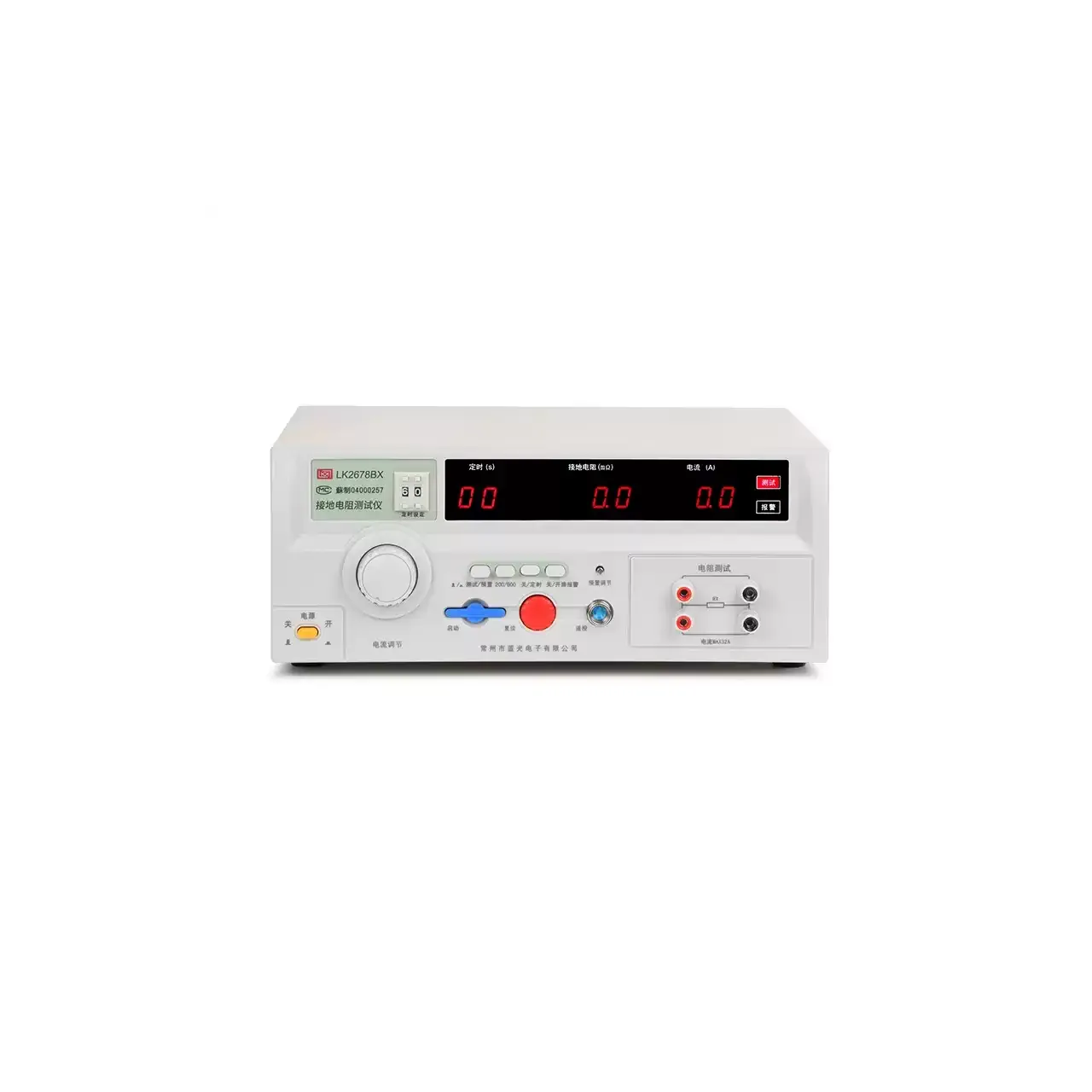
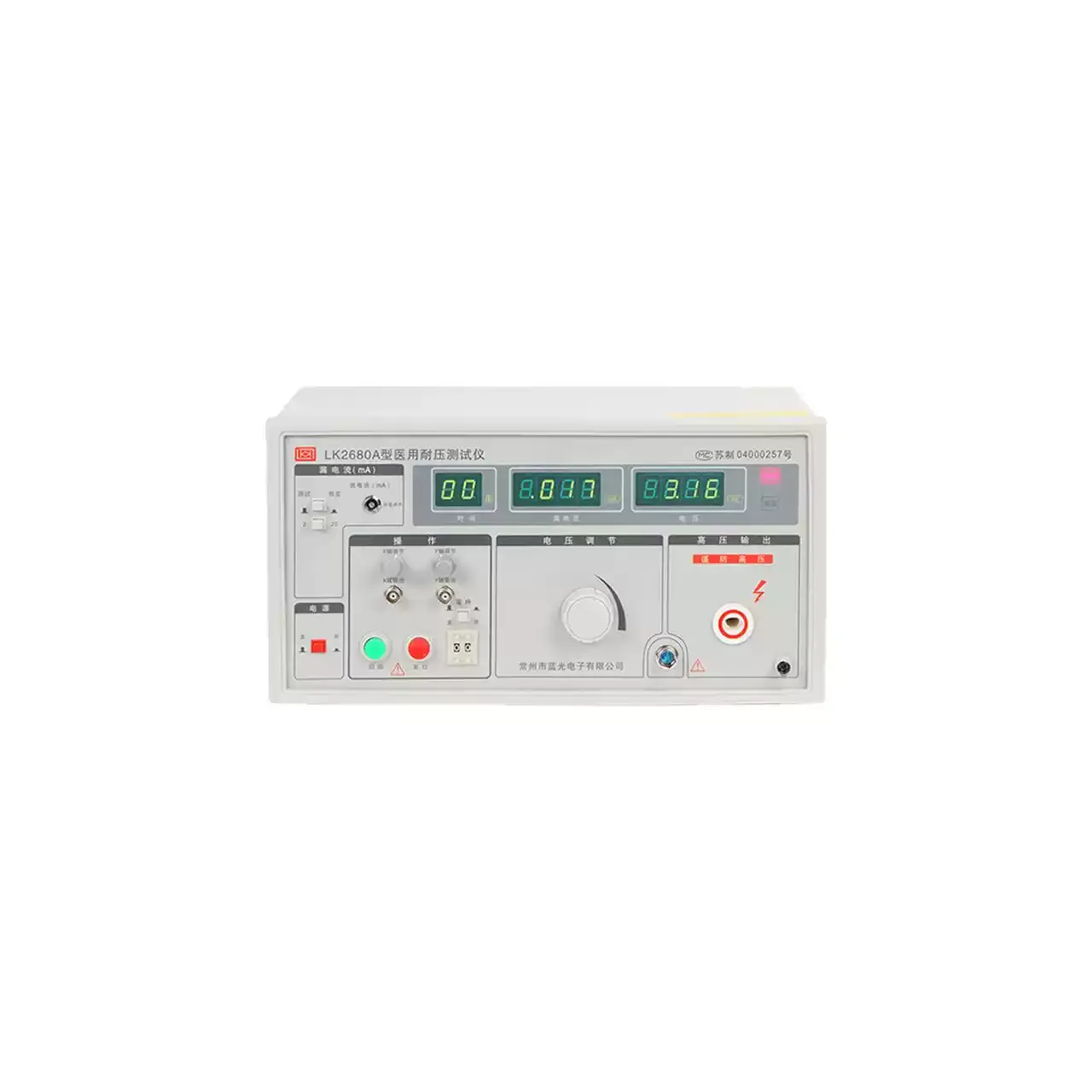
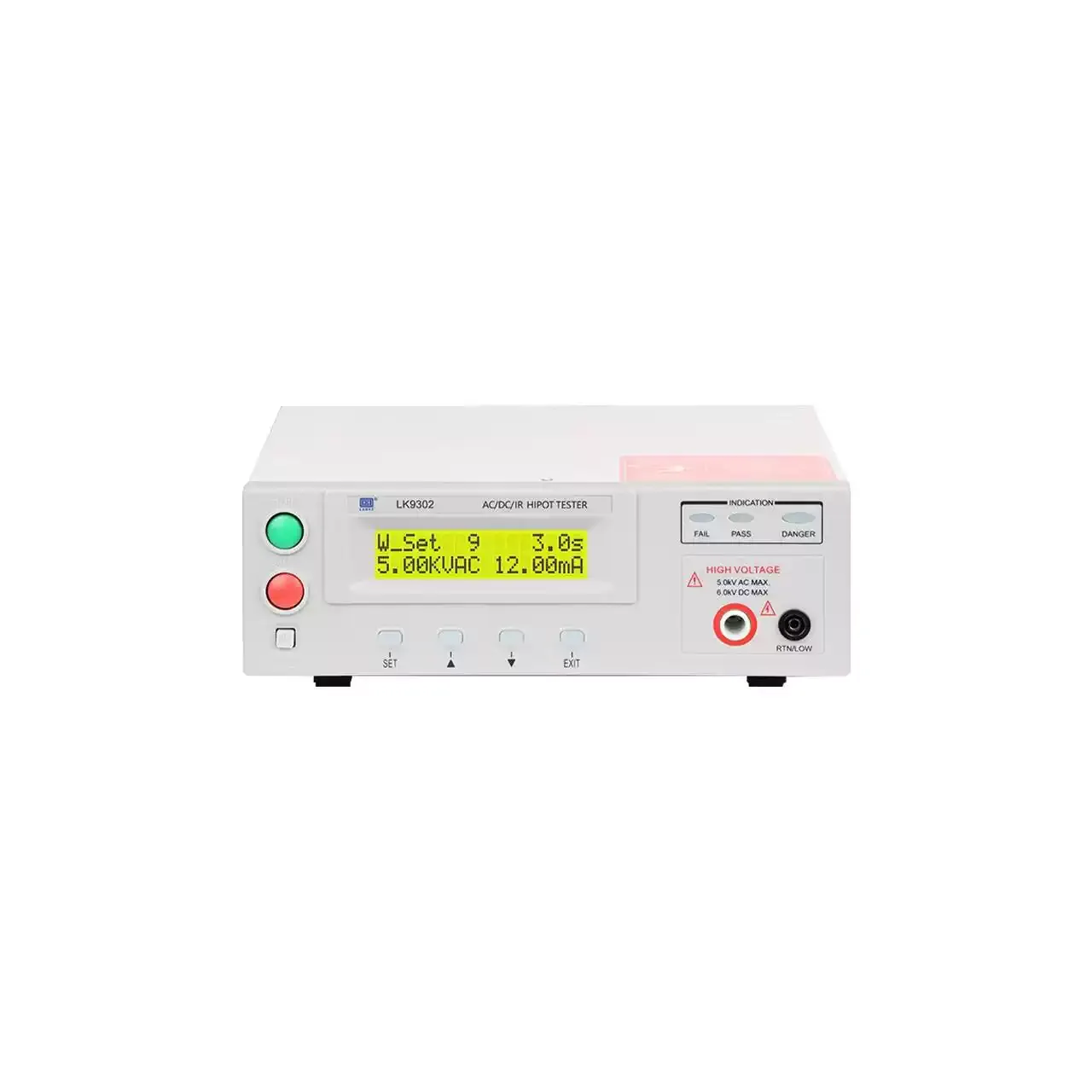
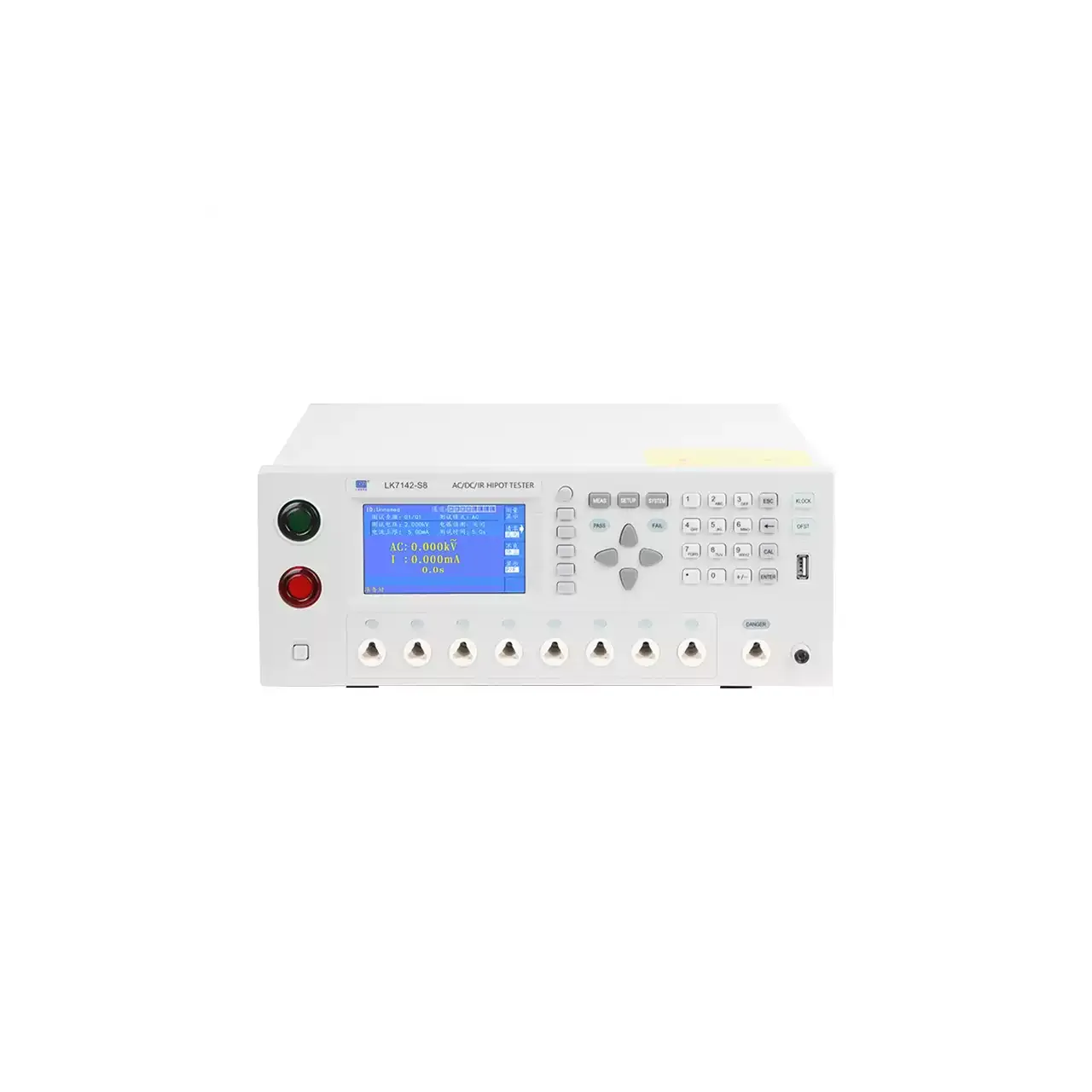
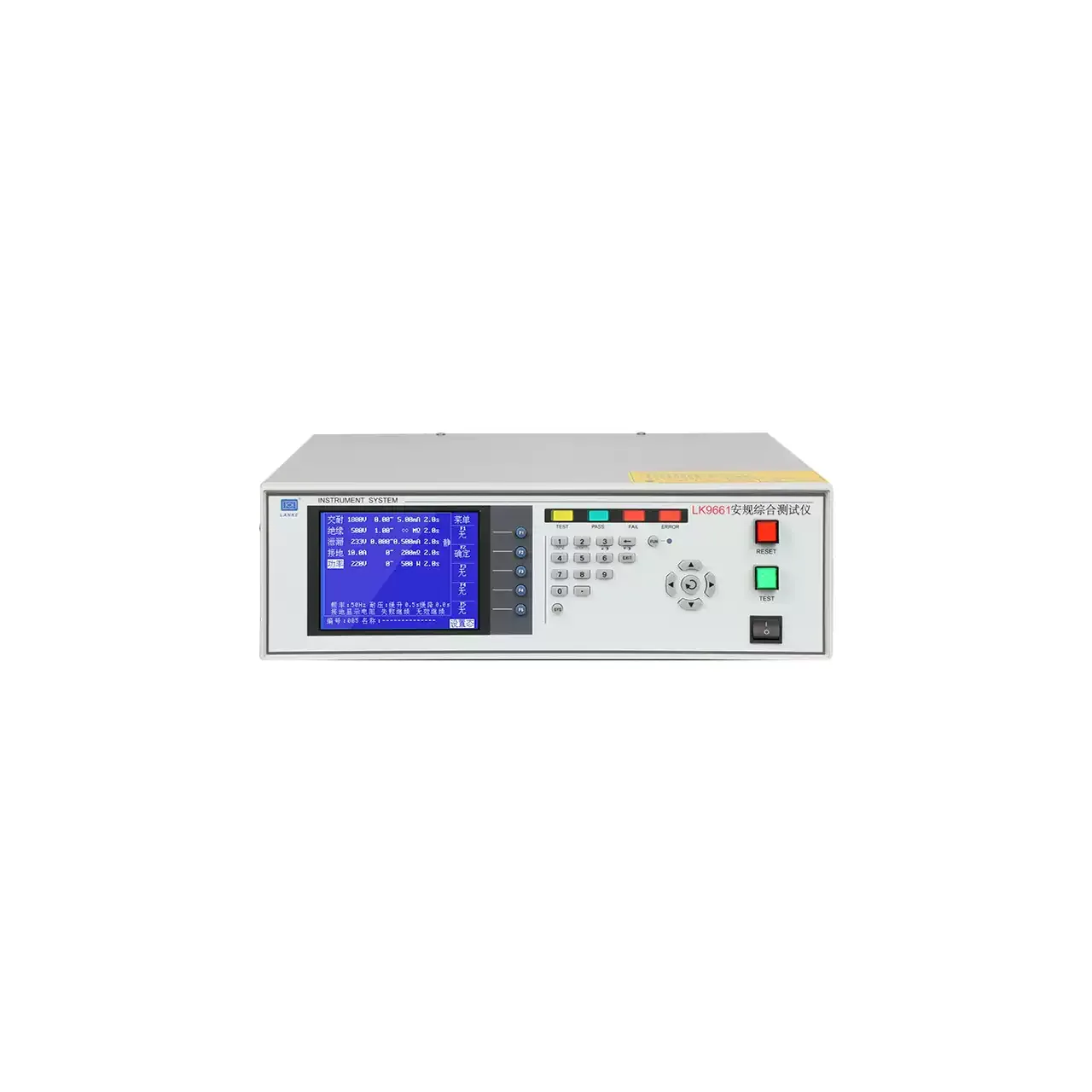
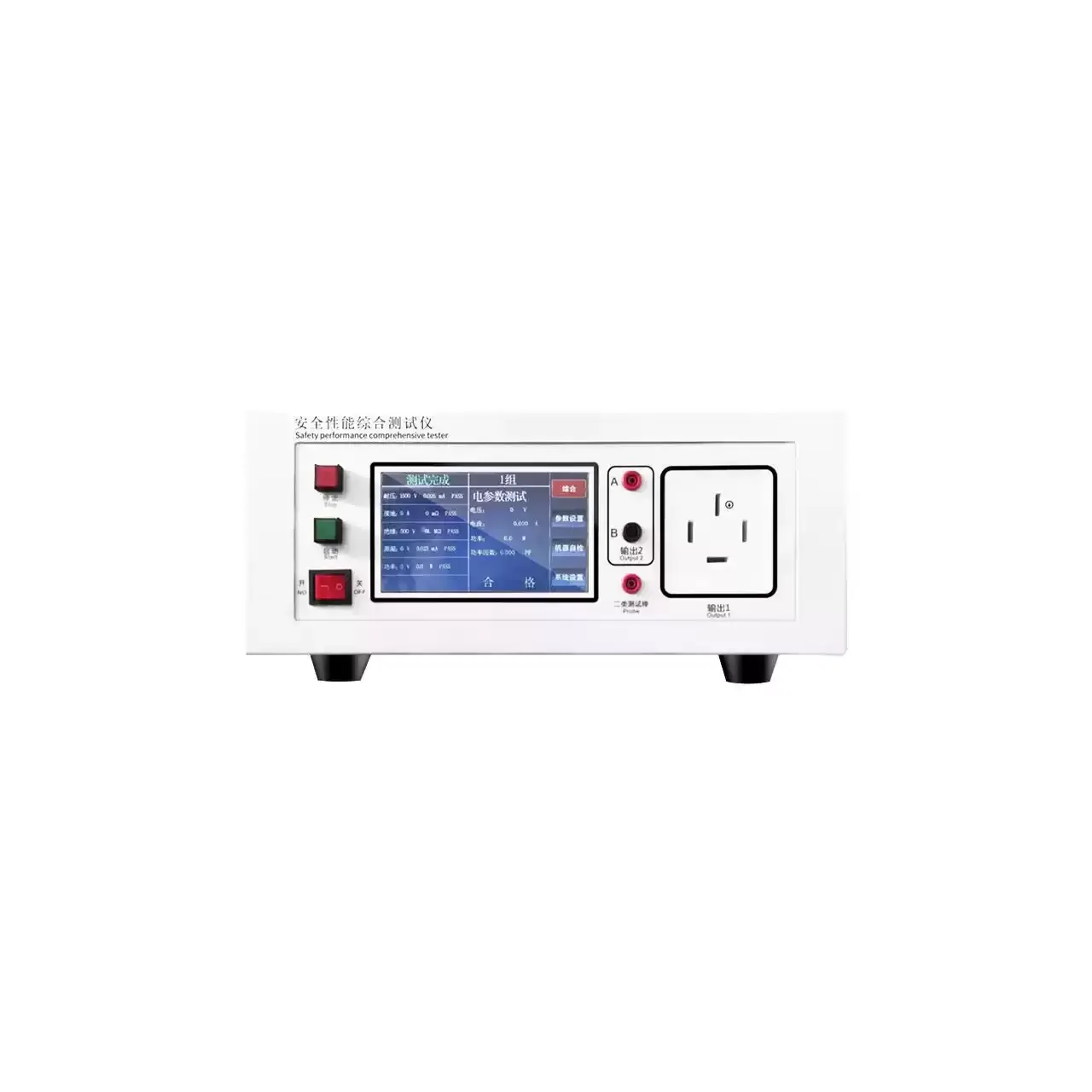
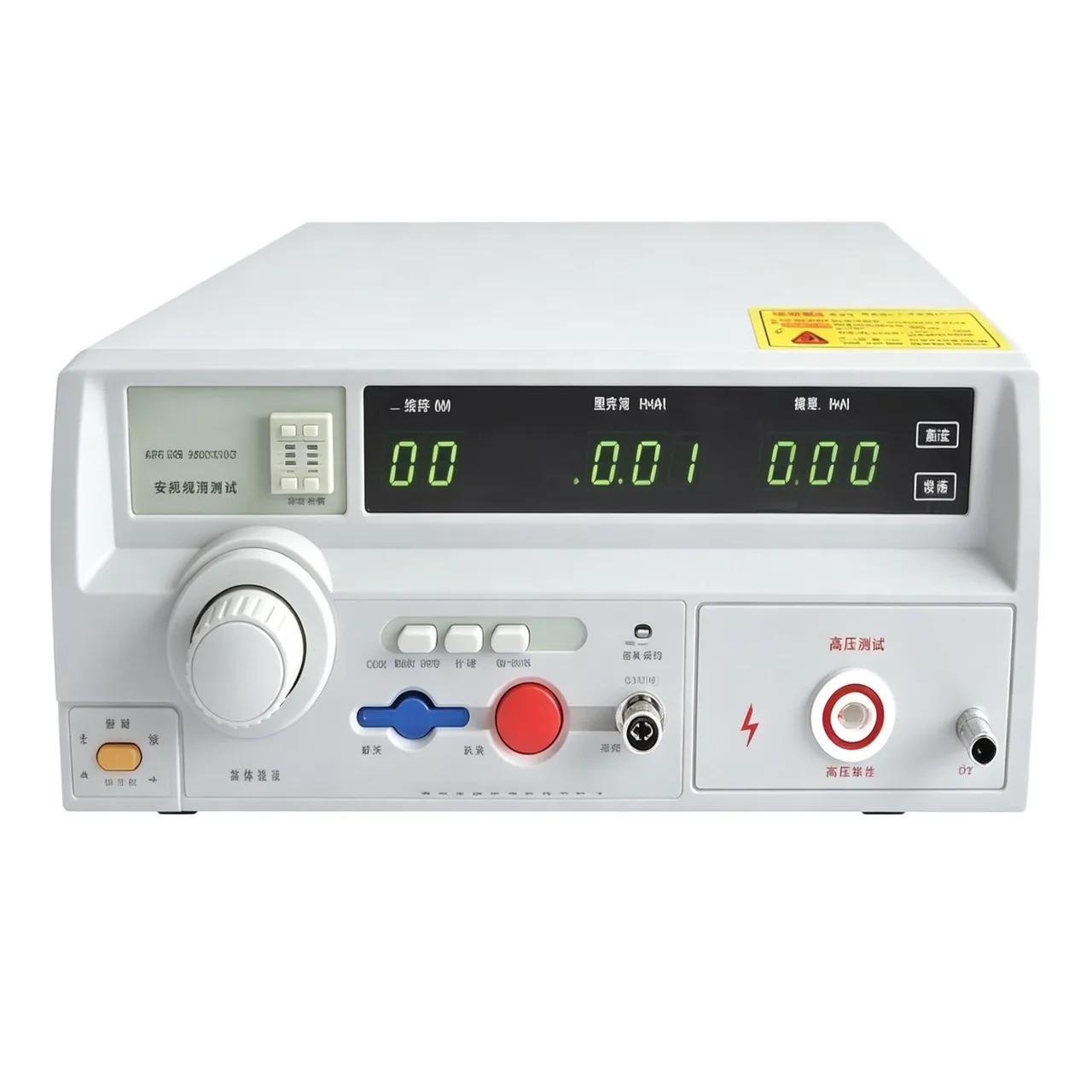
The family is defined by that compliance purpose rather than by any one measurement. A hipot channel raises an alternating or direct voltage over a controlled rise time, holds it for a set period and trips when the current crosses a limit. A ground bond channel forces current through the protective conductor and reads the resulting millivolts. A leakage channel measures current through a network that stands in for a person or for the installation. Combined instruments put several of those channels in one housing so a product can be tested at one fixture in one sequence.
Configuring one is therefore a question of which tests the standard requires, at what level, and in what order, followed by how the item is connected and how the result leaves the bench. This page covers those decisions and the boundary against the insulation tester, which applies a direct voltage but reports a resistance rather than a verdict.
How an electrical safety tester measures
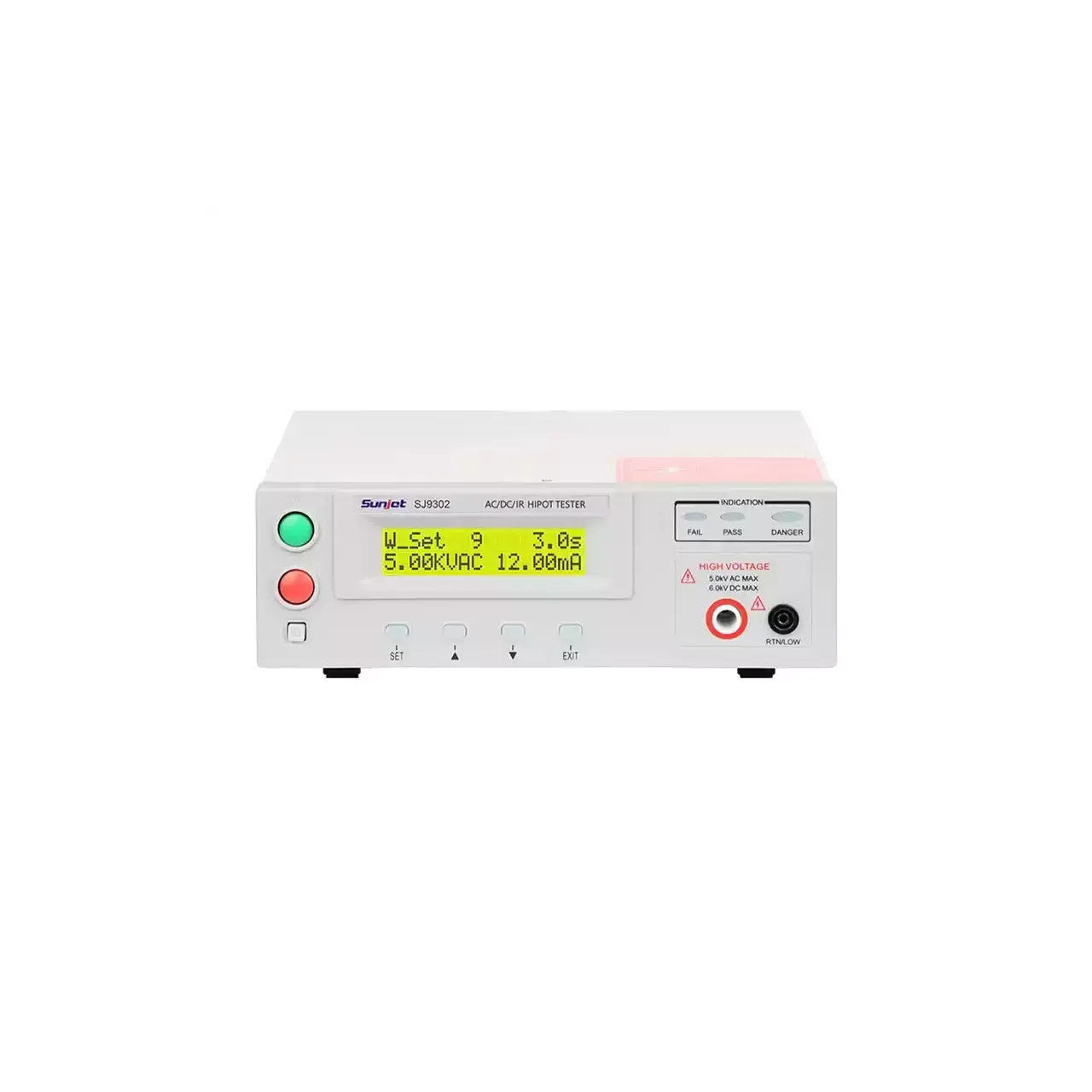
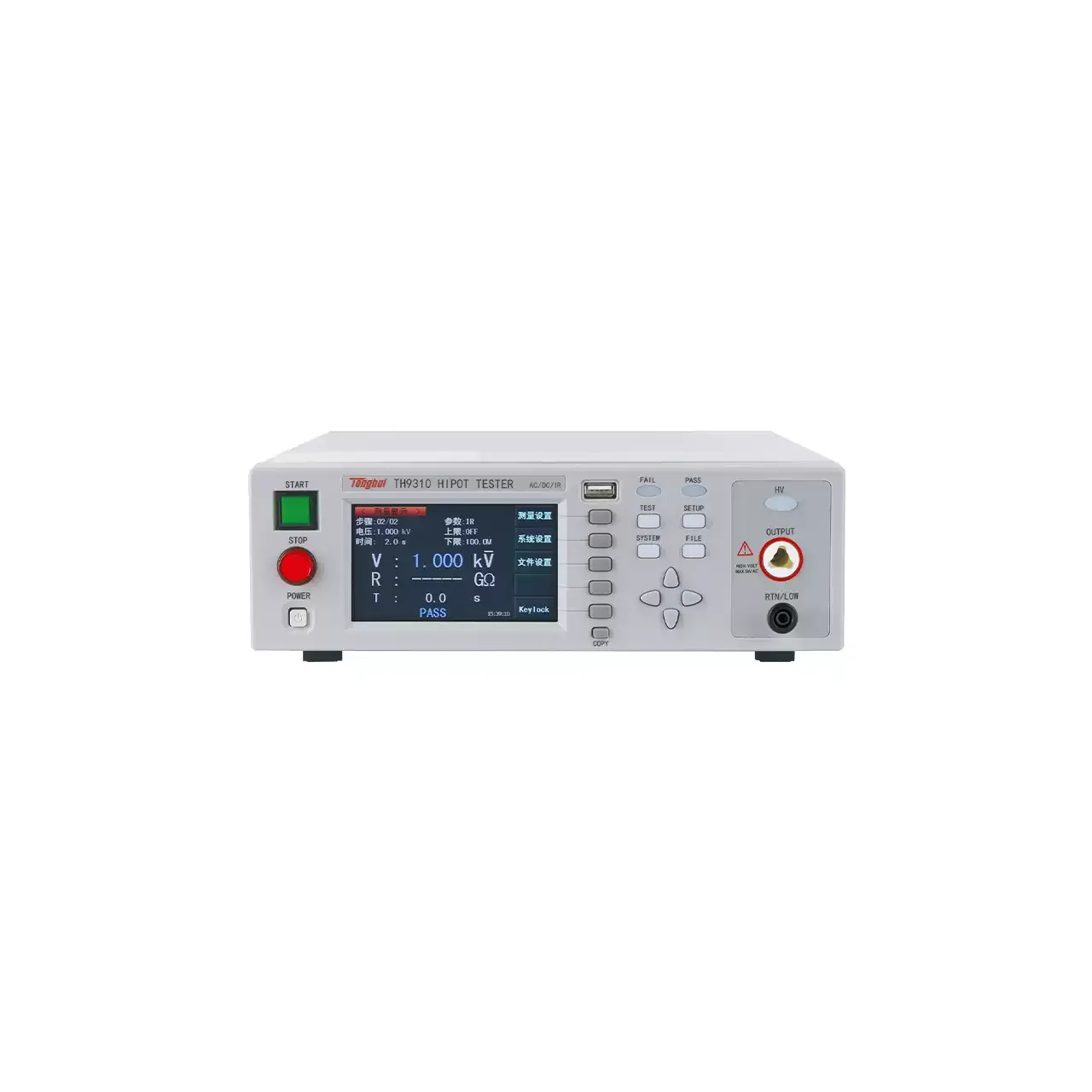
The withstand test is a stress with a threshold, not a measurement of insulation quality. The instrument ramps the output rather than switching it on at the set value, because a capacitive item presented with an instant step would draw a charging current that a steady-state limit was never meant to catch. Once at voltage, the current that flows is compared with an upper limit, which is the breakdown criterion, and often with a lower limit, which catches an item that is not connected at all. The rise time, the dwell and the two limits belong to the test specification, so they come from the product standard rather than from the instrument menu.
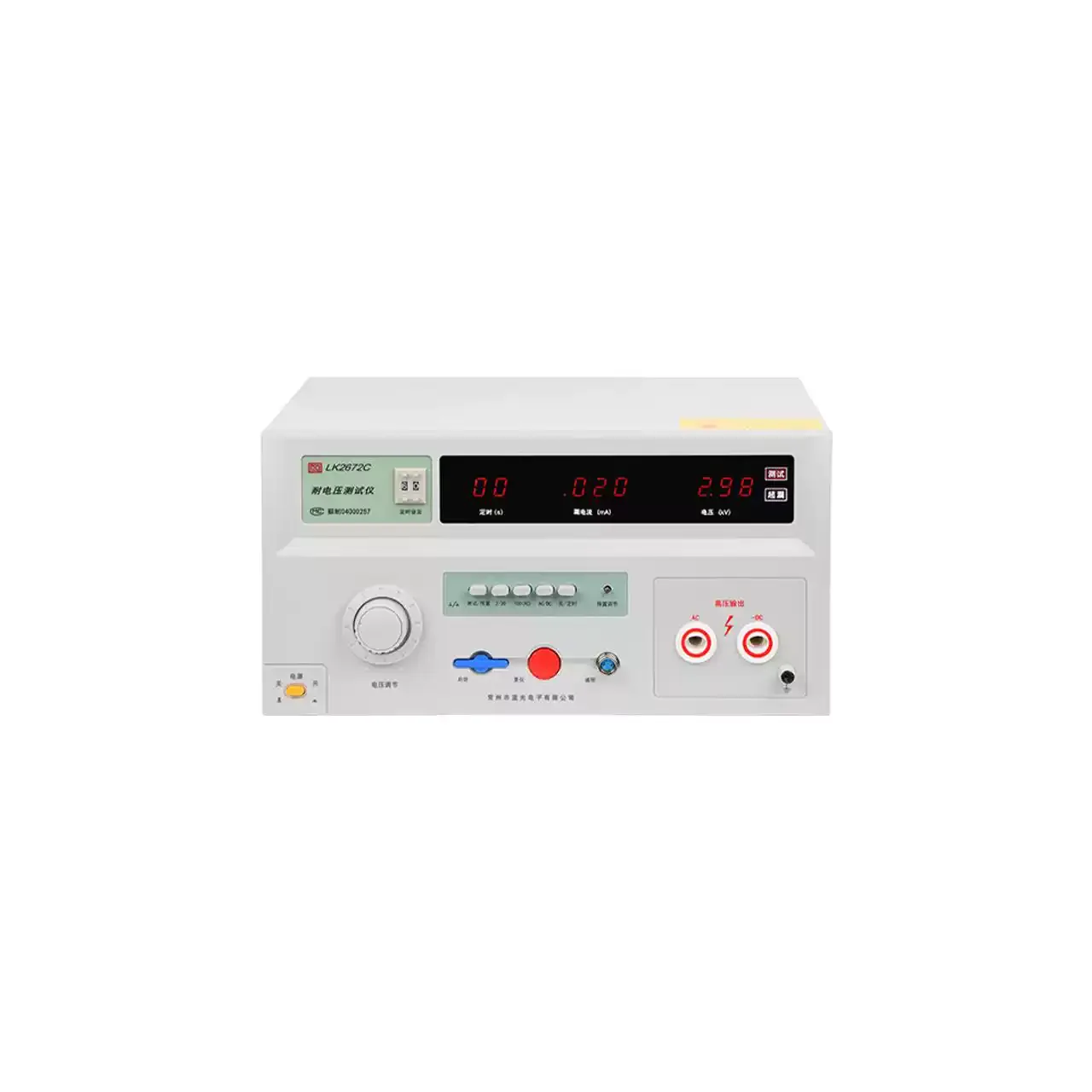
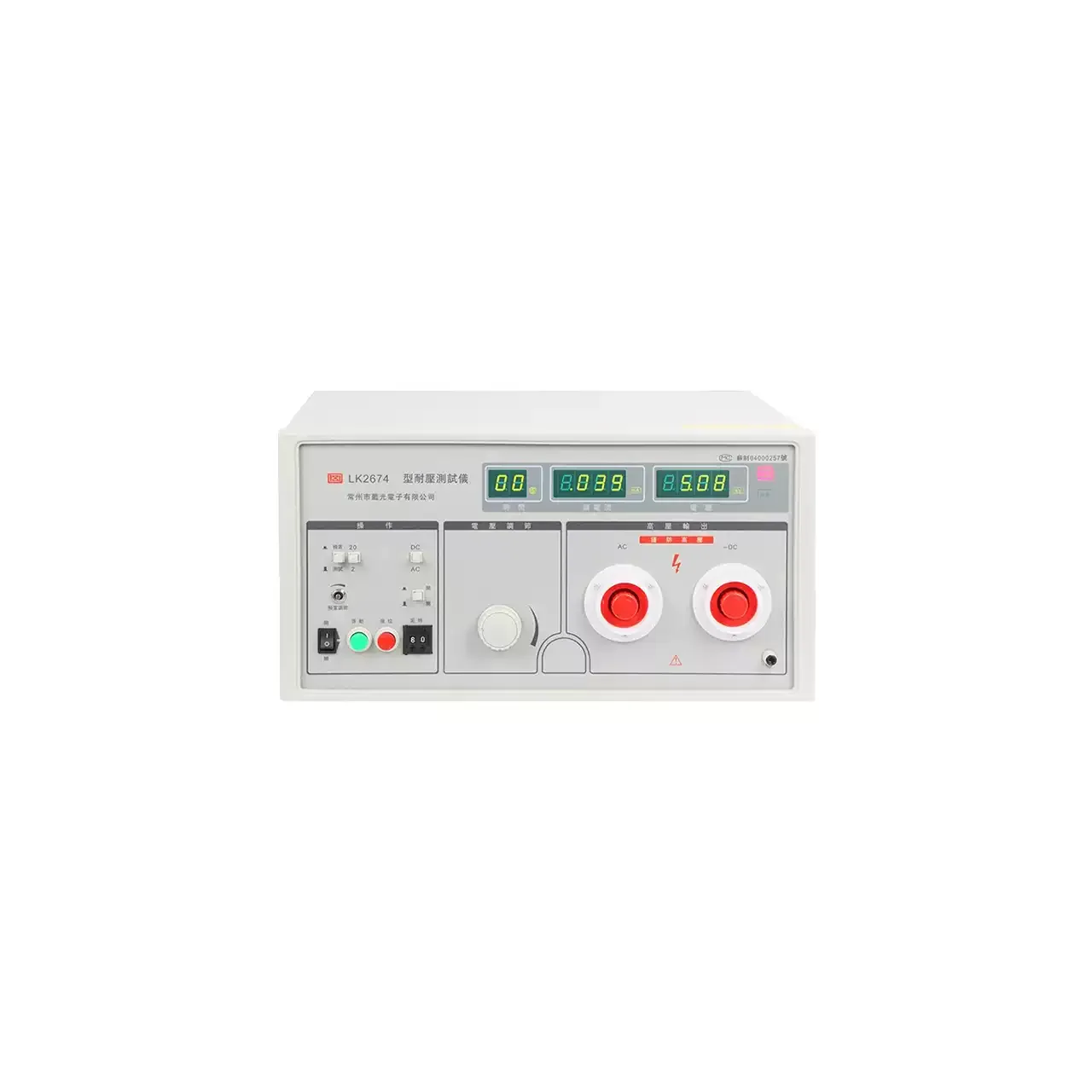
Direct and alternating withstand answer slightly different questions. A direct test charges the capacitance once and then measures the resistive leakage, which makes it the practical choice where the item is highly capacitive and the standard permits it. An alternating test stresses the insulation in both directions and passes a displacement current continuously, which is why its current limit has to be set with the item’s capacitance in mind. A tester that offers only one of the two is not a cheaper version of a combined one; it is a different test.
Ground bond and leakage current are the other half of the same verdict, and both are easy to measure wrongly. A bond resistance is only meaningful when the test current is forced through the conductor and the voltage is sensed across it with a separate pair of leads, so that lead and contact resistance drop out; a two-wire connection reads the fixture as well as the bond. Leakage current is measured through a network whose impedance the standard defines, in a stated condition and polarity, so the network and the condition are part of the specification. A combined instrument shares a source, a return and a sequence between these tests, which is convenient and also means that a failure has to be diagnosed across all of them.
Configuration choices
Most of the specification is fixed by these decisions rather than by the accuracy class. Each one constrains the next, which is why they are settled in order.
| Configuration | Options to fix | What it actually decides |
| Tests carried | Withstand alone, or with insulation resistance, ground bond and leakage current added in a fixed or selectable combination | How many clauses of the standard can be answered at one fixture. Every function added also adds a connection that has to be made correctly. |
| Withstand output | Alternating, direct, or both; the voltage class and the current the source can deliver | Which products can be stressed at the level their standard names, and how quickly a capacitive item reaches that level. |
| Leakage measurement | The measuring network fitted, and whether more than one network or condition can be selected | Whether the leakage figure is the one the standard defines. A generic current reading is not a substitute for the network the clause describes. |
| Ground bond arrangement | The test current the source can force, and whether the sense leads are separate from the current leads | Whether the milliohm result describes the bond or the bond plus the test leads. |
| Channel and scanning provision | A single output, or several channels with a scanner that switches between points | Whether a product with several circuits is tested without re-clipping, and whether each channel can carry its own limits. |
| Sequence and limits | Independent steps, or stored groups linked into a program with per-step limits and times | Whether the operator runs one test or the whole routine, and whether a failure stops the sequence at the right step. |
| Interface and result handling | Pass, fail and in-test contacts, a serial or fieldbus port, and local storage | Whether the bench reports to a line system or to a person, and whether a result can be traced to a serial number. |
| Safety provision | Interlocks on the enclosure, a discharge period after the test, and the way a failure is annunciated | What protects the operator between tests. On a high-voltage bench this is a design decision rather than an accessory. |
How to choose an electrical safety tester
| Factor | Why it decides the answer | How to settle it before enquiring |
|---|
| The product standard | It names the tests, the levels, the limits and often the order | Send the clause list or the standard number. A tester chosen before the standard is read will usually be missing one function. |
| The product and its insulation | Capacitance, insulation class and the protective conductor decide the current the test draws and the level it has to withstand | Describe the item and its supply, and say whether it contains filters or windings that make it capacitive. |
| Which tests are applied to every unit | A routine applied to every unit and an audit sample need different throughput and different fixturing | State which tests run on the line and which are taken on a sample, because that decides the channel count. |
| Points to be contacted per item | A single pair of terminals, or several circuits that have to be tested in sequence | Give the number of test points and say whether they can all be reached at one fixture. |
| Result handling | A lamp for the operator, or a record tied to the unit | Say whether the line system needs the result and in what form, since that fixes the interface at order time. |
| Calibration and verification | The instrument has to be shown to be within its limits at an interval the quality system sets | State whether a certificate is required with the instrument, and at what interval it will be returned for calibration. |
If any of these are still open, send what is known. A quotation can be issued against a duty description and refined once the gaps are filled.
The nearest alternatives
These are the types an enquiry for an electrical safety tester usually turns out to be, and the point at which the choice is genuinely decided.
| Nearest alternative | What separates it from a safety tester |
| Insulation resistance testers | Applies a direct voltage and reports a resistance, often with timed ratios that show how the insulation behaves rather than only whether it survived. A safety tester answers a pass or fail at a defined stress; the insulation tester measures a value that can be followed over the life of a machine. |
| Electrical test equipment | The bench instruments that characterise a unit - supplies, loads, oscilloscopes, component testers - describe what it does, not whether it may be shipped. A supply can hold a product at a voltage, but only a safety tester applies the stress and issues the verdict. |
| Power meters | Reports the power a product draws while it operates. That is a measurement of normal running, taken without a stress, and it says nothing about the insulation or the protective bond; a low consumption figure is not evidence that a hipot test would pass. |
The boundary worth settling first is purpose: a safety tester answers whether a product survived a defined stress, and no amount of accuracy in a bench instrument answers that question.
What to include in the enquiry
The first reply can be a quotation rather than a set of questions if the enquiry carries these. Where a figure is not known, send the duty description and we will confirm what it implies.
- The product standard, and the tests and limits it names
- The item under test, its supply, and whether it is capacitive
- The number of test points and how they are reached at the fixture
- Which tests run on every unit and which on a sample
- Whether results must be stored or sent to a line system
- Quantity, destination port and required delivery date